Understanding Cancer Through the Lens of Ayurveda
The Foundational Concepts of Ayurvedic Oncology (Arbud-Chikitsa)

Introduction
Ayurveda, the ancient science of life, views health as a balance between Doshas, Dhatus, Malas, and Agni. When this balance is disturbed—especially at the tissue (Dhatu) level—it can result in growths and pathologies described as Granthi (minor neoplasms) and Arbuda (major neoplasms or tumors).

Ayurvedic Oncology, or Arbud Chikitsa, is a specialized domain within Ayurvedic medicine that focuses on understanding, preventing, and managing cancer through classical diagnostics, detoxification, rejuvenation, and Rasayana-based therapies.
Terminology & Classical References
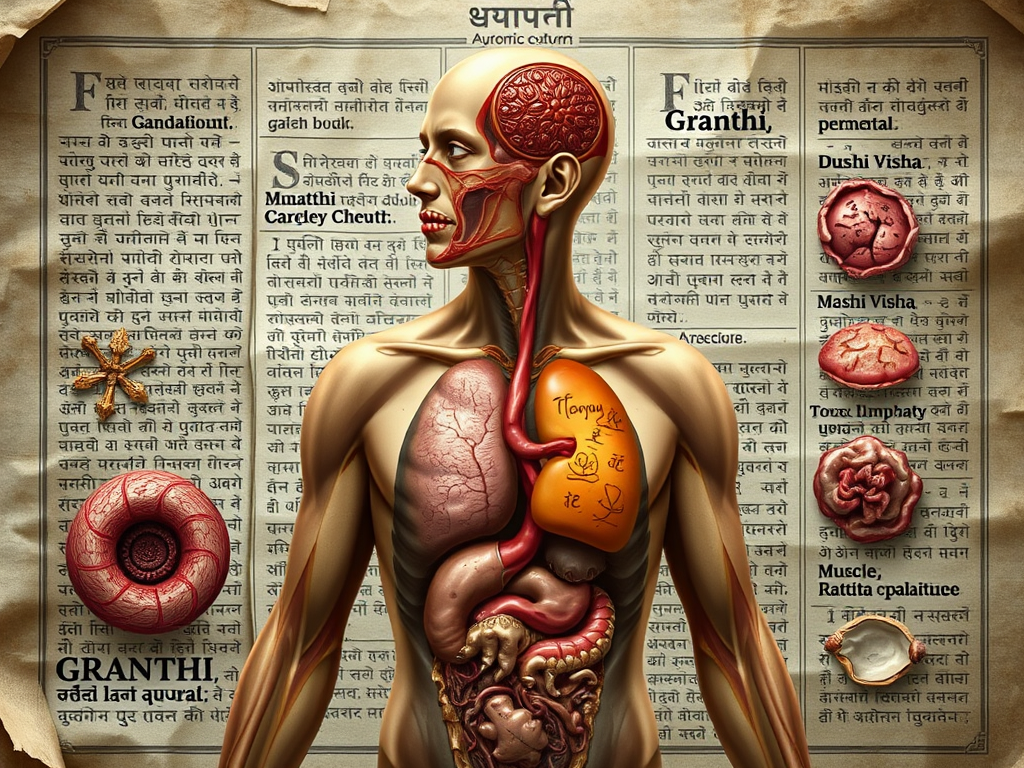
- Granthi – Encapsulated or benign growths (Sushruta Samhita, Nidana Sthana 11/3)
- Arbuda – Malignant growths or deep-rooted masses, often described as Tridoshaja and Asadhya in nature
- Dushi Visha – Concept of chronic, low-grade toxins implicated in carcinogenesis
- Ojakshaya – Depletion of immunity (Ojas), a critical factor in tumor growth
- Mamsa Dhatu Dusti – Abnormal tissue proliferation at the muscle/flesh level
- Vikruta Raktapitta and Kaphaja Granthi – Other descriptions related to blood and lymphatic abnormalities
These references stem from Charaka Samhita, Sushruta Samhita, and Ashtanga Hridayam.
Nidana Panchaka (Ayurvedic Diagnostic Framework)
Ayurvedic diagnosis of cancer involves fivefold assessment:

- Nidana (Etiology) – Viruddha Ahara, Apathyasevana, chronic Aama, emotional suppression
- Purvarupa (Prodromal Symptoms) – Unexplained fatigue, pain, swelling, altered digestion
- Rupa (Clinical Features) – Mass formation, discoloration, ulceration, weight loss
- Upashaya (Therapeutic Response) – Partial relief through Langhana, Deepana, Rasayana
- Samprapti (Pathogenesis) – Srotorodha (channel obstruction), Dhatvagnimandya, and Dhatu Dusti
Ayurvedic Pathogenesis of Cancer (Samprapti)
Cancer is seen as the result of:

- Dhatvagni Mandya – Weak tissue-level metabolism
- Aama Utpatti – Accumulation of toxins and undigested metabolic residue
- Srotorodha – Obstruction in microchannels (leading to tumor formation)
- Ojakshaya – Depletion of vital immunity
- Vikrita Dhatu Nirmaan – Formation of non-functional or atypical tissue (Granthi/Arbuda)
This highlights how systemic imbalance leads to local pathology and tumor growth.
Ayurvedic Principles in Cancer Management

- Nidana Parivarjanam – Elimination of causative factors
- Shodhana Chikitsa – Panchakarma-based detoxification to cleanse and reset the system
- Shamana Chikitsa – Herbal protocols to control Doshas and reduce tumor burden
- Rasayana Therapy – Immunomodulation and tissue rejuvenation
- Aahara-Vihara – Diet and lifestyle based on Prakriti and disease stage
- Manas Chikitsa – Mind-body practices, Satvavajaya Chikitsa, meditation, spiritual care

 Ayurved Oncology